
3rd September 2026
The first time I heard one Australian calling another a ‘Drongo’ I had no idea what was meant by that term. It sounded as if it ought to be an insult, but it had been spoken in a light-hearted, friendly kind of way and not at all derogatively. I very quickly worked out that it was the same as calling someone a twit, or an idiot, when they’d just done something silly and the result was mildly amusing.
It was years later when I first saw an actual drongo. I was living in the tiny town of Tin Can Bay, in Queensland, Australia and had just recovered from several weeks of war, with a family of 13 sulphur-crested cockatoos who were trying to eat the wooden railings on my back balcony. We fought back with water pistols and despite being out-numbered we had eventually prevailed and the cockatoos had flow off to chomp on the balcony of a house across the street.
It seemed to be a lovely contrast, just a few days later, when the drongos began to visit on a regular basis. The cockatoos had been huge, white birds with raucous calls and destructive beaks. The drongos were more akin to three small black arial gymnasts who had decided to make my garden into their circus ring. But humans are well-known for being taken in by glorious birds and we soon discovered that these three small, highly intelligent tricksters were even better at manipulation than the cockatoos.
We were fascinated. We discovered that if we threw small amounts of meat into the air, the drongos would swoop, loop-the-loop and catch the small offering even, it seemed, when flying upside down. It appeared as if they simply ignored the pull of gravity.
Drongos are fearless and opportunistic. I can imagine them sitting in a war-zone bunker with a pair of binoculars, gathering information and planning their attack! We had been nicely softened up by the cockatoos and were ripe to be taken advantage of. The prize? Those small pieces of meat we tossed into the air.
Now, I am at a point of change in my life. Nothing major, just a recognition that something I had given the last couple of years to was no longer right for me. I’ve been working on writing a fiction trilogy which is very different to previous writings. The first book is close to ready, and the second book was started. Then writer’s block took over. After a few months of getting nowhere, I decided to try writing a different book, on a different topic and everything was going well, when, once again it all screeched to a halt.
A couple of days ago I decided I needed to look at why I simply could not get back into writing either of these books and realised that I had lost the joy I experience when writing smaller pieces. Pieces like this blog. Or short stories. These things flow easily and I don’t get bailed up in the rules of writing. I just give a nod of respect to those rules and continue to write from my heart instead.
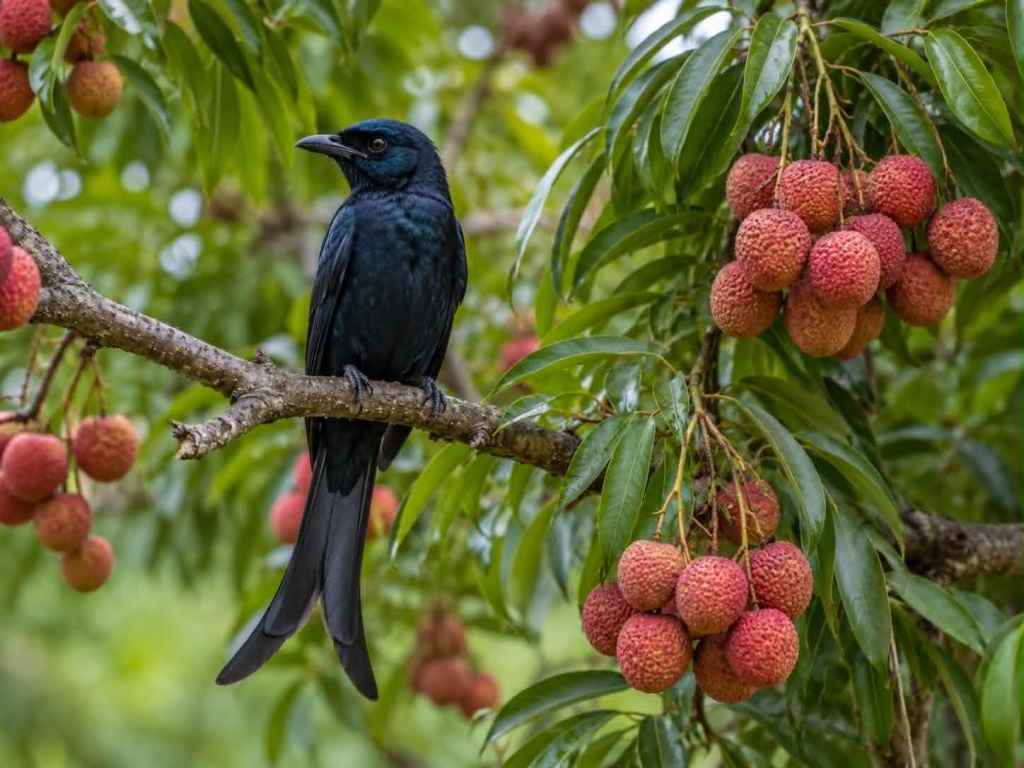
I made the decision to leave the novels for a while and return to the style of writing that I love – a style which gives me the freedom to cover many different perspectives. The first step was to dust off my blog. I sat at my computer, pulled up the WordPress site and started to hunt for a new lay-out. I glanced up, and discovered, sitting on a branch of the lychee tree which grows just outside the window was single spangled drongo. He just sat, for a few hours, watching me work and giving me the confirmation I needed that my free-fall acrobatic version of writing, without much adherence to the laws of grammar, is exactly the way I need to go. It is what brings me the prize – joy in creation.
Drongos are resourceful. They are very alert for hidden motives, and they take time to observe before swooping in to catch the prize. They look at opportunities from all sides and where fear is detected, they offer insight and protection. Smaller birds are known to nest near drongos taking advantage of the safety offered. They are not part of the Corvid family, but like Crow, they are known as a bridge between Earth and the world of Spirit. They are sometimes called King Crow.
When drongo appears in your life, there are a few things to consider. He is intelligent and adaptive. His sharp eyesight warns you to observe carefully before jumping into a new venture. He’s a trickster, but he’s also a protector. Be aware that there are two sides to every story; be wise in the decisions you make but don’t let fear hold you back – you have the skills and the instinct to make good and productive choices.
Far North Queensland, Australia
3rd September, 2026

 Auri'An Lay
Leave a comment